• Home
  • For the Public
  • For Therapists
  • Articles and Resources
  • Contact Us

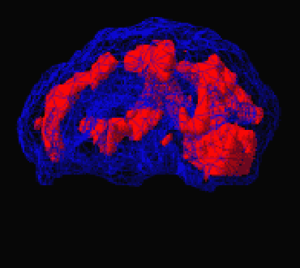
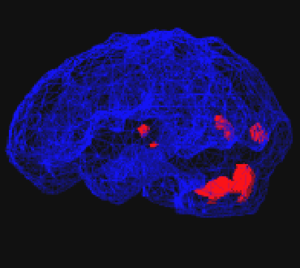
brain before emdrScan of Brain after EMDR


Before and after EMDR brain scans. Top photo shows woman with Post Traumatic Stress Disorder. Bottom photo shows same patient after four ninety minute EMDR sessions. The red areas indicate overactivity in the brain. Photo by Dr. Daniel Amen, reprinted with permission.

TPL_BEEZ5_SYSTEM_MESSAGE

  • Email


Are you struggling with…
  • Depression?
  • Stress?
  • Relationship Issues?
  • Anxiety or Worry?  Panic?
  • Post-traumatic Stress (PTSD)?
  • Performance Issues?

graphic

Find an EMDR Trauma
Therapist near you

Search by specialty

Search by location

Directory

 Sign Up For

Spread the Word
Newsletter


graphic

We can help you. See video about EMDR.


EMDR can help you to…

  • Feel good about yourself
  • Feel more confident with others
  • Reach your goals in less time

What is EMDR and why is it a “comprehensive therapy”?

The dictionary defines “comprehensive” as inclusive; covering many things; including all, complete.  EMDR is a multi-sensory approach to therapy that has been demonstrated to accelerate the healing process for 80-90% of clients, making it much easier for people to identify and release all kinds of internal blocks and fears.  Generally known as EMDR, this acronym stands for “Eye Movement Desensitization and Reprogramming” — quite a mouthful!  But also quite a breakthrough in treatment.

EMDR therapy has been validated by over 20 years of research.  Because of EMDR’s unique multi-sensory approach, it is highly effective.  People who have suffered for years from the bondage of negative mental and emotional states often find freedom at last as a result of these methods.

EMDR comprehensive therapy is useful for overcoming stressful experiences of all kinds — even deeply embedded traumas, which can be the basis of your depression, anxiety, relationship challenges, phobias, fears, or performance issues.

A Directory of EMDR Therapists

Choose with confidence

This website only lists therapists who have completed EMDRIA-Approved training and received their certification to practice EMDR comprehensive therapy.  Each therapist in our directory is EMDRIA-Certified, or is in the process of completing their Certification, based on the standards and protocols established by the EMDR International Association.  This assures you that anyone referenced here is qualified to provide you with the highest level of comprehensive treatment.  No other directory offers you this assurance.

Of course, your choice of a therapist is more than their credentials.  It is very important to choose someone with whom you feel safe, accepted, and understood.  These elements are part of a successful therapeutic relationship.  Thus, we recommend you choose a few therapists you are drawn to and interview them by phone to see who you connect with best.

For the benefit of therapists who wish to become certified in this comprehensive therapy approach, we also list Consultants, Facilitators and Trainers approved by the EMDR International Association to provide thorough consultation in EMDR.


FEATURE ARTICLE


Physician: Heal and Care for Yourself -- with Support

  • Email

By Dana Terrell, LCSW, EAC

All Health Care Providers have a lot of responsibility on their shoulders

Physicians, Dentists, Surgeons, RNs, Acupuncturists, Chiropractors  --  all Health Care Providers have a lot of responsibility on their shoulders. They are exposed to many patients’ suffering, and are expected to heal them. Sometimes the physician/nurse/teacher/therapist becomes the one in need of healing support. We may become stressed, unable to feel compassion, or traumatized by something we have witnessed.

This is fine.  We are human, too.  We will have our human needs and responses.  The goal, however, is to attend promptly so that the need can be resolved rather than continue to build.

We want a quick return to resilience, rather than requiring a long convalescence and recovery.

You know a lot about self-care already

You already know these principles, and would not have lasted as long as you have without a sense of balanced care for yourself.  But we can subtly slip into a stressed state. This is why it is worthwhile, as an individual and as an office, to discuss these issues together, at least annually.

Health care providers can subtly slip into a stressed state

SIGNS OF STRESS:

No time for eye contact

No time for small talk, connecting

Easily frustrated, critical, moody

Rolling eyes, increased sarcasm

Poor sleep, poor health, accidents


SOLUTIONS:  Read More Articles in the "Physician, Health Thyself" Series:

How to Gain Amazing Office Growth and Support

©2012 Dana Terrell, LCSW, EAC

More Articles...

  1. EMDR Documentary

Page 1 of 2

  • Start
  • Prev
  • 1
  • 2
  • Next
  • End
  • home |
  • for the public |
  • articles & resources |
  • for therapists |
  • find a therapist |
  • contact |

copyright 2009 My Trauma Therapy, San Diego, California 92104Joomla!®